
Reviewed · WILLEMSTAD WALKING TOURS
Curacao Walking Tour – Best way to get to know Willemstad!
Willemstad is easiest to understand on foot, and this tour gives you a clear route through both sides of St. Anna Bay. In about two hours, you’ll move from Otrobanda’s murals to Punda’s Dutch-era streets, cross the Queen Emma Pontoon Bridge, and finish with Curaçao rum.
I like the well-planned route, which covers forts, monuments, the floating market, colorful buildings, and several cultural stops without asking you to arrange transport. I also like the practical local angle: guide Nicole has picked up a hotel guest directly and offered useful advice about places to eat and relax. The main drawback is that the tour is short for the number of stops, so some visits are brief rather than in-depth.
Key points to know before you book
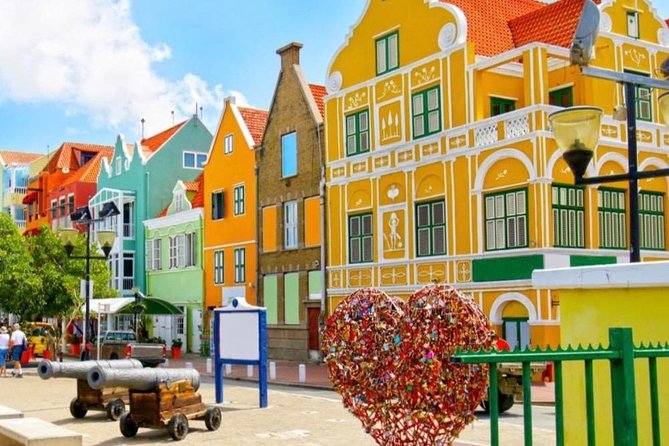
- Two historic districts in one walk: You’ll visit both Otrobanda and Punda, connected by the Queen Emma Pontoon Bridge.
- A strong first-day introduction: The route helps you get oriented before a beach outing, shore excursion, or independent exploring.
- Fortifications and colonial streets: Fort Amsterdam, Rif Fort, Kura Hulanda, and the Handelskade area show different sides of Willemstad’s past.
- Rum tasting included: The walk ends at AnnaBay Club Rum, with a chance to sample local rum and take home a bottle.
- Cruise-friendly timing: The usual start is 10:00 am, but cruise passengers can provide their arrival time so the start can be adjusted.
- Expect moderate walking: Transportation is not included, and the group may reach 30 people, so this is a shared city walk rather than a private tour.
Why a walking tour is a smart way to meet Willemstad
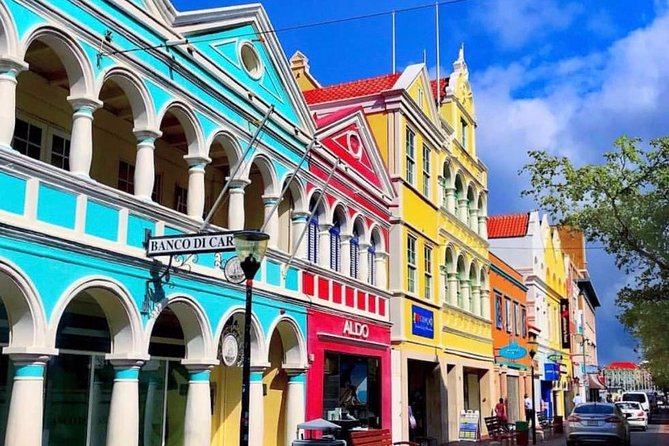
Willemstad can look like a collection of pretty facades from the waterfront. Walking gives those buildings a setting and a story. You cross between two old quarters, pass military sites, see public monuments, and get a sense of how commerce, religion, slavery, and seafaring shaped the city.
The route begins in Otrobanda, on the western side of St. Anna Bay. It then reaches Punda, the older commercial quarter founded after the Dutch took Curaçao from Spain in 1634. From there, you return across the water and continue through Otrobanda’s fort and restored streets.
That design matters. You are not simply driven to isolated sights, taking a quick photograph, and moving on. You see how the neighborhoods connect. The Queen Emma Bridge is part of the city’s daily rhythm, not just a photo stop, and the forts make more sense when you see their position beside the harbor.
The tour is also a useful way to get your bearings early in a stay. One earlier start-of-trip tip is especially practical: take this walk before deciding where to eat, relax, or spend free time. You’ll have a better sense of the city center and can return to the places that catch your interest.
More walks around Curacao
- The best walking tour Willemstad
★ 5.0 · 488 reviews - The Curacao’s Colorful History Walking Tour
★ 5.0 · 55 reviews - Cultural and Historical Audio guided walking tour Tour of Otrobanda, Willemstad
★ 4.0 · 8 reviews
Otrobanda murals and the Luis Brion statue
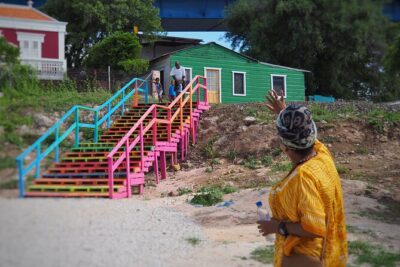
Your first stop is Otrobanda, one of Willemstad’s important historic quarters. The walk points out colorful streets and murals, where local art sits alongside older buildings and public spaces.
This is a good opening because Otrobanda gives you more than the postcard waterfront. The district has a neighborhood feel, and the murals add a contemporary layer to the city’s older architecture. You can expect about 10 minutes here, enough for an introduction and a look around, but not a long art-focused tour.
The next stop is Brion Plaza, where you’ll see the statue of Luis Brión. Brión was born in Curaçao and became an admiral who fought for the freedom of countries in Gran Colombia. The monument gives the guide a chance to connect the island with the wider political story of the Caribbean and northern South America.
For you, this stop is valuable because it adds a local figure to a city tour that could otherwise focus only on Dutch forts and architecture. The visit is brief, so listen for the main points and ask questions if the group has time.
Punda, the floating market, and Willemstad’s commercial heart
The walk continues to Punda, founded in 1634 after the Dutch captured Curaçao from Spain. Its original Dutch name, de punt, means the point, a simple name that reflects the district’s position beside the water.
Punda is where the city’s colorful facades, shops, plazas, and waterfront activity come together. A guide can help you read the layout instead of treating it as a string of attractive buildings. The 10-minute stop is enough to introduce the quarter, but you should plan separate free time if you want to shop or explore at a slow pace.
The floating market is one of the most distinctive stops. Just off Handelskade, wooden boats sit on the water with fresh produce arriving from nearby Venezuela. It is a small but memorable scene, and it shows how the harbor still connects Willemstad to regional trade.
You might find that the market’s appeal depends on the day and time, since the tour provides only a short visit and the experience is tied to what is available when you arrive. Still, it is exactly the kind of everyday detail that makes the center feel like a working city rather than an open-air museum.
Crossing the Queen Emma Pontoon Bridge
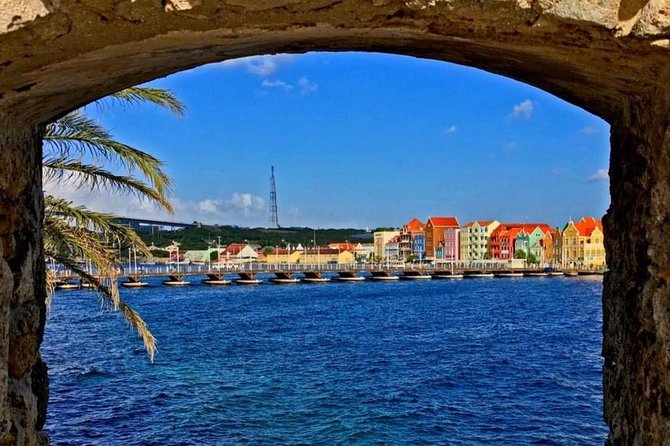
The Queen Emma Pontoon Bridge links Punda and Otrobanda across St. Anna Bay. It is hinged and opens regularly to let boats pass, so the crossing is part of the harbor’s operation.
This is likely to be one of the most enjoyable parts of the walk. You get a clear view of both waterfronts, and the bridge itself is more unusual than a standard city crossing. If it opens during the tour, the walking pace may change while boats move through the channel. The supplied schedule does not promise a bridge opening, so treat that as a possible bonus rather than a planned feature.
The bridge also helps you understand Willemstad’s geography. From the center, the two districts can seem like separate destinations. Crossing on foot makes their connection obvious and gives the tour a natural midpoint.
More Tours in Curacao
- Klein Curacao Day Trip with Premium Open Bar and BBQ-Lunch
★ 4.5 · 1,302 reviews - Aquafari Tour in Curaçao
★ 5.0 · 1,240 reviews - Curacao: Swimming with Sea Turtles meets Sea turtle beach
★ 5.0 · 1,058 reviews - Klein Curacao Adventure Day Trip
★ 4.5 · 944 reviews
The Chichi Shop and a useful bit of free time
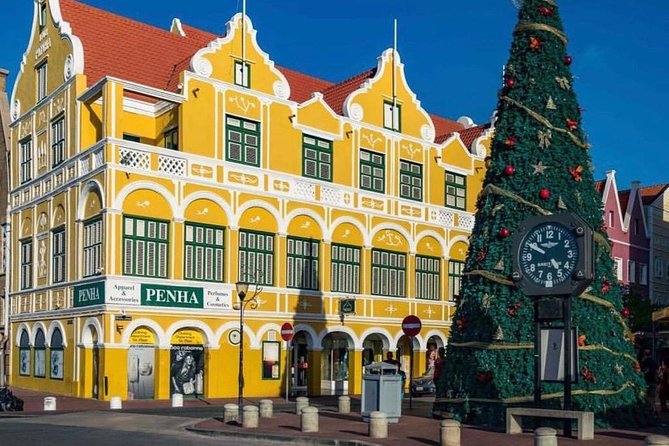
In Punda, the route includes the Chichi Shop. Chichi sculptures are a recognizable Curaçao craft, and this stop adds a shopping and design angle to the tour.
The shop is not presented as a long workshop or hands-on class. Expect a short visit of about 10 minutes. It is useful if you want to see a local craft associated with the island, and it may help you choose a small souvenir later.
If you prefer forts and political history to shopping, this will be a lighter stop. That is one reason the tour works best as an introduction. It gives you several small windows into Curaçao, then lets you decide which subjects deserve more of your own time.
Rif Fort and the Renaissance Mall
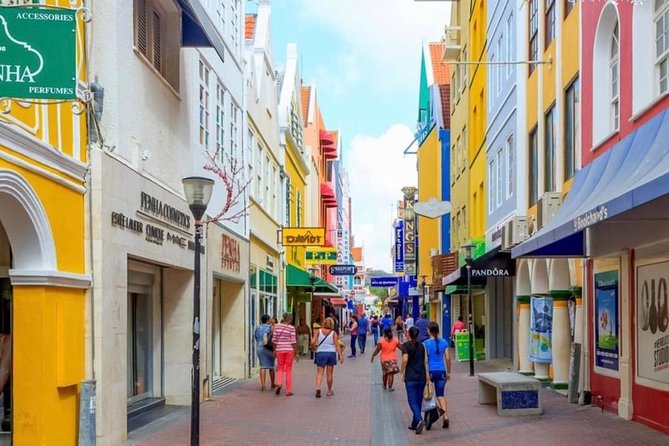
After crossing back toward Otrobanda, you’ll visit Rif Fort, built in 1828. The former fort now includes the Renaissance Mall, with stores, bars, and places to eat in a waterfront setting.
This stop shows how Willemstad has reused old defensive buildings. You can see the military purpose in the fort’s origins, while the current shops and restaurants show how the area functions today. It is a useful contrast with Fort Amsterdam, which remains more directly associated with the early Dutch period.
The practical advantage is that Rif Fort is also a convenient place to note for later. If you want a drink, a meal, or more shopping after the tour, this area may be worth returning to. The tour itself does not include food or shopping, so anything you purchase here is at your own cost.
Kura Hulanda’s lanes and the difficult past
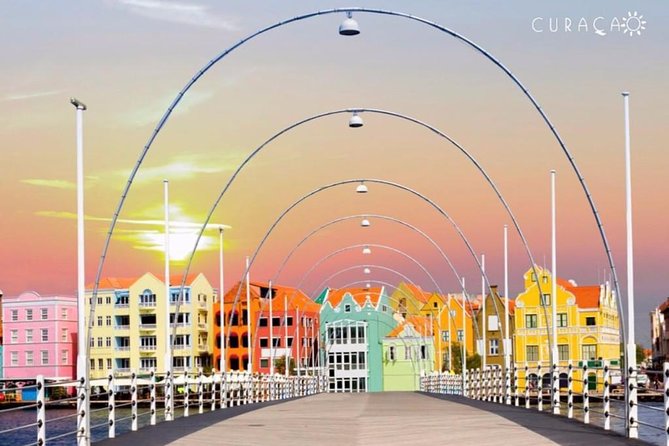
Kura Hulanda Village is a restored area in Otrobanda with cobblestone lanes, colonial houses, cafés, and small shops. The setting is attractive, but its importance is not only visual. The nearby Kura Hulanda Museum addresses the history of slavery, and the walk can place Curaçao’s architecture in that harder context.
The route includes Kura Hulanda Village, while the information provided does not state that museum admission is part of the tour. Do not assume you will have time for a full museum visit during the two-hour walk. If that subject matters to you, ask the guide what you can see during the tour and consider returning separately.
This is one of the places where a local guide adds real value. Restored houses and pleasant lanes can make the past look tidy. A good explanation helps you remember that Willemstad’s prosperity was tied to trade and forced labor as well as to architecture and harbor activity.
Fort Amsterdam and the oldest Jewish community
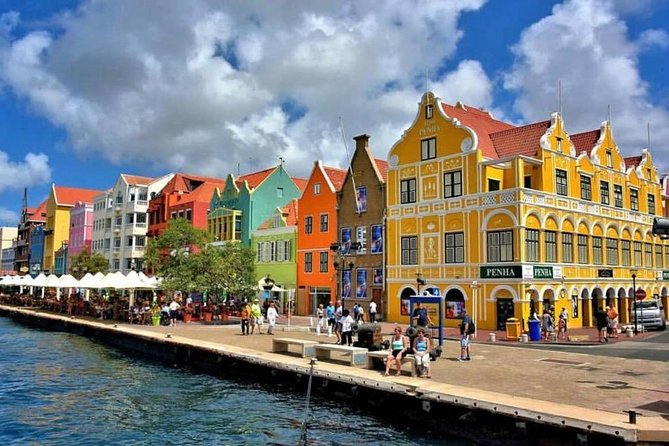
Fort Amsterdam was built in 1634 by the Dutch West India Company. It served as a military fort and as the company’s headquarters, making it one of the central historic sites in Willemstad.
The fort is an important stop because it connects the city’s foundation with military power and commerce. You’ll spend about 10 minutes here, so expect an overview rather than a full fort study. The guide can point out what to notice and explain why the site mattered, while you take in the setting around the fort.
The walk also passes information connected with one of the Caribbean’s oldest Jewish communities. Many early settlers were Sephardic Jews from Portugal and Spain, and they contributed to trade, finance, and the island’s cultural life.
The tour description names the synagogue as one of the key city-center sights, while the detailed stop list does not specify a full interior visit. Plan on seeing or passing the site rather than assuming synagogue admission is included. The same applies to any museum entrance. The tour price covers the guided walk, water, and rum tasting, not separate admissions.
Finishing with AnnaBay Club Rum
The final stop is AnnaBay Club Rum Distillery, where the tour ends with a rum tasting. This is a pleasant way to close a walk that has covered military sites, markets, crafts, and city neighborhoods.
The tasting is included, but the details do not specify how many samples are offered or how long the tasting lasts. You can also take a favorite bottle home, though any purchase is separate from the tour price.
I like this ending because it gives the route a distinctly Curaçao finish. It also makes the price easier to assess. At $35 per person, you are paying not just for a guide’s narration, but for a mapped city route, bottled water, and a tasting. If you would otherwise walk the center independently, the value depends on how much you want historical context and help with orientation.
What the two-hour format really means
The listed route has about 10 stops, each allotted roughly 10 minutes. Add the walking between them, bridge crossing, and any short pauses, and the stated duration of about two hours makes sense.
You should expect a steady overview, not extended time at each attraction. That is a benefit if you are in Willemstad for a day, arriving by ship, or trying to see the main center before another outing. It is less suitable if you want detailed museum visits, long shopping stops, or a slow photography walk.
The group can include up to 30 people. That is a reasonable size for a popular city walk, but it may affect how easily you can ask questions or hear every explanation. If you prefer a quiet, highly personal pace, ask Samurai Curaçao whether a smaller or private option is available. No private format is promised in the details provided.
The usual start time is 10:00 am, and the tour returns to its meeting point. Transportation is not included, so you need to reach the start on your own. Cruise passengers should give the provider their arrival time so the beginning can be adjusted to fit the ship schedule.
The tour calls for moderate physical fitness. You’ll be walking through city streets, across a pontoon bridge, and between several districts. Wear comfortable shoes, carry sun protection, and take the included bottled water seriously. Those are simple choices, but they make a warm two-hour walk much easier.
Who will get the most from this Willemstad tour?
I would choose this tour if you want a clear introduction rather than a specialist history lesson. It suits first-time visitors, cruise passengers with limited hours, and anyone who likes to learn where the main sights are before exploring alone.
It is also a good match if you want local suggestions. Nicole, one guide associated with the experience, has picked up a hotel guest and offered ideas about food and places to relax. You should not assume every tour is led by Nicole, but you can ask the provider about the guide for your date.
Families with older children may appreciate the short stops and varied subjects. The walk includes murals, forts, a bridge, a market, shops, and a rum tasting, so it does not stay on one topic for too long. Service animals are allowed.
I would hesitate if your priority is a museum-heavy experience or a private conversation with a historian. The group may reach 30 people, several stops last only 10 minutes, and transportation or admission to separate attractions is not included.
The experience has a 5.0 rating from three published reviews, which is a small sample. The strongest praise centers on the learning value, the city overview, and the help with choosing places to eat and relax. That matches the tour’s design: it gives you a useful first look at Willemstad, then leaves room for you to return to the subjects you want to explore more fully.
Should you book the $35 walking tour?
Book it if you want to cover the main center efficiently and understand what you are seeing. The combination of Otrobanda, Punda, Fort Amsterdam, Kura Hulanda, Rif Fort, the floating market, Queen Emma Bridge, and a rum tasting is good value at $35, especially if you are short on time.
Think twice if you dislike group walks, need long visits at each site, or already know Willemstad well. For most first-time visitors, though, the route is practical and well chosen. Take it early in your stay, listen for the food and relaxation tips, and use the rest of your time to return to the places that interest you most.
Free cancellation is available up to 24 hours before the start time. A full refund is offered if the tour is canceled because of poor weather or because the minimum number of participants is not reached.
FAQ
How long does the Curaçao walking tour last?
The tour lasts approximately two hours.
What time does the tour start?
The standard start time is 10:00 am. Cruise passengers should provide their arrival time so the provider can adjust the start to fit the ship schedule.
Where does the tour end?
The tour ends back at the meeting point.
Is transportation included?
No. Transportation is not included, so you must make your own way to the meeting point.
What is included in the price?
The tour includes a friendly local guide, bottled water, and a rum tasting.
Can I cancel for a full refund?
Yes. You can cancel at least 24 hours before the experience start time for a full refund. Changes or cancellations made less than 24 hours in advance are not accepted for a refund.
Just added around Curacao
- Taste of Curaçao: City Tour, Chobolobo & Mambo Beach★ 5.0 · 7 reviews
- Blue Curacao Factory and City Tour★ 5.0 · 3 reviews
- Curacao Sea Trek Snuba Combo Walk Tour and Dive the Ocean★ 5.0 · 4 reviews
- Curacao Private Transportation★ 4.0 · 5 reviews
- Curacao Sea Turtle Swim and West Side Natural Highlights★ 4.5 · 10 reviews
- Ultimate Full-Day Private Tour: Discover all Curacao highlights★ 5.0 · 8 reviews
- Vibrant City Tour by Night: The perfect night out when in Curacao★ 4.0 · 8 reviews
- Turtles, Beach and Flamingo in Curacao Private photoshoot Tour★ 5.0 · 4 reviews
Willemstad Walking Tours, compared.

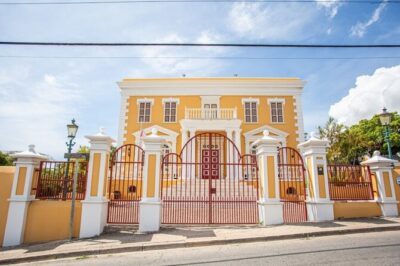
Cultural and Historical Audio guided walking tour Tour of Otrobanda, Willemstad
Read our review →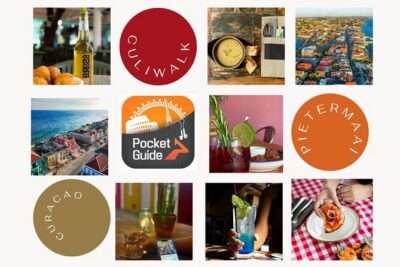
Taste of Pietermaai: Self-Guided Food & Culture Tour
Read our review →
Browse the lists this tour appears in