
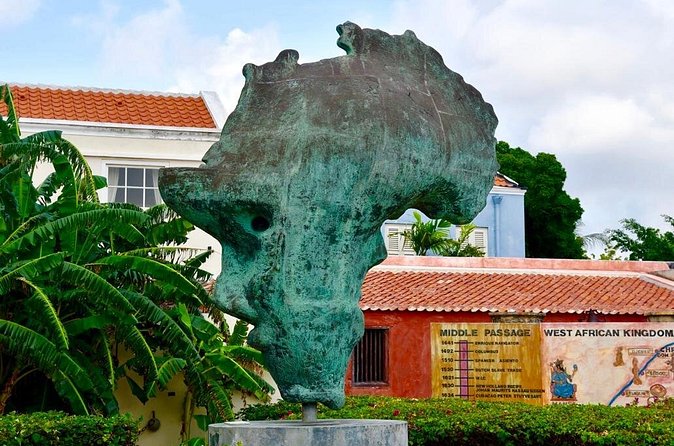
Reviewed · WILLEMSTAD
Entrance Ticket Kurá Hulanda Museum (not including guide service)
The most important part of Kurá Hulanda Museum is its clear look at how Curaçao was tied to the Transatlantic Slave Trade. Exhibits connect the island’s harbor with the forced movement of Africans to plantations across the Caribbean and the Americas, then show how African culture continues to shape Curaçao.
I like the museum’s large collection of African objects and its direct approach to a painful subject. I also like that you can visit without committing to a full-day tour, since the museum sits in central Otrobanda and takes about one to two hours for a basic visit. The main drawback is that there is a great deal of reading, and some visitors find the museum tiring to navigate, especially without a guide.
Key Points to Know Before You Go
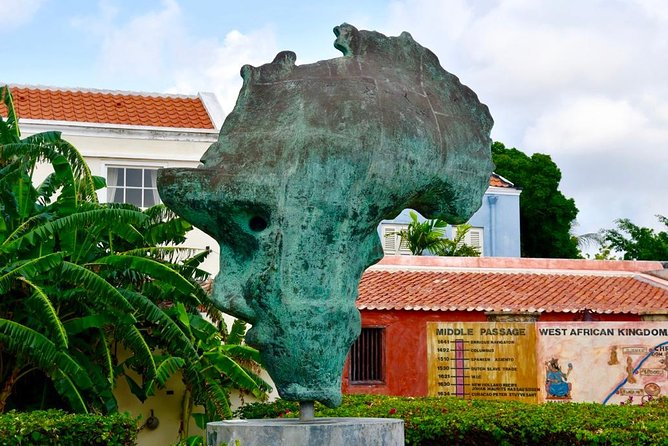
- Curaçao’s role takes center stage: The museum explains how Willemstad’s harbor served as a regional transfer point for enslaved people.
- African artifacts add cultural depth: Displays go beyond slavery itself and include objects from continental Africa and other cultures.
- A guide can change the visit: Optional tours cost $5 per person and are offered in Dutch, English, Papiamentu, and Spanish.
- Plan more than the minimum: One to two hours is a reasonable visit, but three hours gives you time to read and think.
- The museum is in Otrobanda: You arrange your own transportation, but the site is near public transportation.
- Opening hours matter: It is open Monday through Saturday from 8:00 a.m. to 4:00 p.m., and Sunday from 9:00 a.m. to 2:00 p.m. It closes on official holidays.
Why This Museum Matters in Curaçao
Curaçao is often introduced through its colorful waterfront, floating bridge, beaches, and Dutch colonial buildings. Those sights are worth your time, but they do not explain the forces that shaped the island. Kurá Hulanda supplies an essential piece of that picture.
The museum focuses on the long history of African displacement, from early periods through the 16th to 19th centuries and the Atlantic trade. You learn how millions of Africans were captured, sold, transported, and forced to work in the New World. Curaçao’s part in this system is not treated as a footnote.
Willemstad’s harbor was a major regional transfer point. Enslaved people passed through the area on the way to plantations in North and South America and elsewhere in the Caribbean. That makes the museum especially relevant if you are already walking around the city. The story is not separate from Willemstad. It is part of the city’s past.
The subject is painful, and the museum does not make it light. I would not schedule it as a quick stop between a beach outing and dinner unless you are prepared to give the exhibits your full attention. Some displays are disturbing. Others invite quiet thought about identity, memory, and the continuing effect of this history on Curaçao and the wider Caribbean.
Other tours people book around Willemstad:
- Curacao: Swimming with Sea Turtles meets Sea turtle beach
★ 5.0 · 1,058 reviews - Curacao Beach and Hato Caves Tour
★ 4.5 · 440 reviews - Best Highlight Island Tour – Perfect Day Tour. Small group Tour
★ 5.0 · 430 reviews
Walking Through the Otrobanda Museum
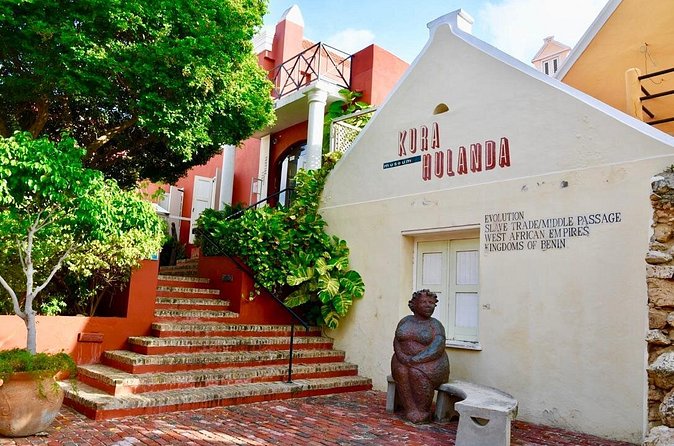
Kurá Hulanda Museum is located in the city-center harbor area of Otrobanda. The visit is self-guided unless you pay for the additional tour, and a receptionist provides a museum map to help you find your way through the collection.
The exhibits cover several connected subjects. The central focus is slavery and the Atlantic trade, but the museum also presents African cultures, objects from continental Africa, and material from other societies involved in this history. This wider view matters because the museum is not only about suffering. It also shows the cultures, skills, beliefs, and artistic traditions of the people who were violently removed from their homes.
You can expect a lot of text. If you read every panel carefully, the visit will take longer than the advertised one to two hours. A few people can move through the main sections quickly, but I think that approach misses much of the museum’s value.
The Africa room receives particular praise for its cultural displays and unusual objects. The collection includes artifacts said to be as old as 4,000 years, along with objects connected to later African and Caribbean history. The range gives you a better sense of the societies that existed before and beyond the slave trade.
This is also a museum where context matters. An object can be interesting on its own, but the explanation beside it may show how it relates to trade, religion, labor, family life, or colonial power. That is one reason I would consider the guide fee money well spent.
The Value of the Optional Guided Tour
Admission costs $12 per person, and the guide service is not included. Guided tours are available for an additional $5 per person in Dutch, English, Papiamentu, and Spanish.
The self-guided visit works best if you prefer moving at your own pace. You can stop at the displays that matter most to you, reread difficult sections, and spend extra time with the African collection. A map and receptionist are included, so you are not left without basic direction.
The guide adds something different. Several strong experiences at the museum have involved guides who explain the stories behind the objects, answer questions, and connect the exhibits to Curaçao. Guides named in visitor comments include Ms. Milva and Evonne, though you should not assume a particular guide will be available on your visit.
A good guide can also help with the museum’s large amount of written material. One guide, for example, led a mixed Dutch and English group and allowed time for questions. Another was praised for explaining the development of the slave trade in Curaçao and for bringing the subject to life for a teenager.
The quality of the guiding may vary. One visitor found the explanation too general and felt that the guide could not answer many questions. That is worth keeping in mind. Still, the repeated praise for passionate and well-prepared guides makes the $5 supplement reasonable, especially for a first visit or a group with many questions.
For a group of more than six, a private or organized guide may be especially useful. The activity itself has a maximum of 15 people, but the included admission does not promise a private tour.
Give Yourself Time for a Difficult Subject
The official estimate is one to two hours. I would treat that as the shortest sensible window, not a target.
If you arrive with limited time, you can see the main rooms and leave with a basic understanding of Curaçao’s connection to slavery. If you want to read the explanations, consider the objects carefully, and pause after the more upsetting sections, allow closer to three hours.
The museum asks for a different pace than a photo stop. You may need time to process what you are seeing. The subject includes forced transportation, sale, labor, and the destruction of families and communities. The strongest guides do not simply recite dates. They help you understand the human cost.
That emotional weight is one of the museum’s strengths, but it also means this is not a carefree activity for small children. The information is educational and many ages can participate, yet parents should decide if their children are ready for direct material about slavery and cruelty.
I would visit earlier in the day if possible. The museum opens at 8:00 a.m. Monday through Saturday and closes at 4:00 p.m. Sunday hours are shorter, from 9:00 a.m. to 2:00 p.m. Check the day carefully, since official holidays bring a full closure. Arriving at opening time may not mean immediate entry if staff are still preparing, so allow a little flexibility.
Same island, a different sort of day:
- Snorkel with Turtles & Kenepa Grandi Beach: Nr.1 Island Day Trip
★ 4.5 · 419 reviews - Swim and Snorkel with Sea Turtles
★ 5.0 · 309 reviews - Beach Hopping Curacao; UTV/Buggy All Inclusive Semi Private Tour
★ 4.5 · 271 reviews - The Curacao Private Beach Hopping / Snorkeling Tour
★ 5.0 · 207 reviews
What the Artifacts Add to the Story
The objects are more than decoration. They help you picture the cultures and daily lives that written accounts can make abstract.
The collection includes African artifacts and works from other cultures connected to the broader story. Some displays are striking because of their age or craftsmanship. Others are difficult because they show tools, restraints, or objects associated with the treatment of enslaved people.
The museum also presents the relationship between Africa, Europe, Curaçao, and the Americas. That connection is useful for anyone who knows the general outline of the slave trade but wants to understand the Dutch role and Curaçao’s place within it.
Expect a mixture of history, material culture, and art. The Africa section may appeal to you even if you came mainly to learn about Curaçao. It provides cultural background and keeps the museum from reducing African history to the period of enslavement alone.
The displays are not perfect. Some written translations may feel uneven, and parts of the museum could be better maintained. The experience is also more traditional than interactive. You should not expect many hands-on exhibits, digital screens, or a polished modern museum design.
That tradeoff is important. If you want a highly interactive presentation, you may find the visit old-fashioned. If you care most about the objects and the subject matter, the collection remains the main reason to come.
Practical Details for Your Visit
The price is $12 per person. For a museum with a serious subject, a substantial collection, and the ability to visit independently, I consider that a fair price. The optional $5 guide fee is also modest compared with the extra context it can provide.
Your ticket includes the receptionist and museum map. It does not include transportation, souvenirs, or the guide. You can buy items at the museum shop, but those purchases are separate.
The museum is near public transportation, but you must arrange your own way there and back. No hotel pickup is included. If you are already exploring Willemstad, the location makes it easier to combine with other central sights. If you are staying outside the city, allow time for transport rather than assuming the museum is a quick roadside stop.
The activity is capped at 15 people, which should make the basic visit manageable. A guided group may still feel busy in the narrower exhibit areas, especially when several people stop to read the same panel.
Mobility is worth considering. The visit involves a good deal of walking, and one person was able to see most of the museum but had to stop when the distance became too much. If you have mobility limits, ask the receptionist about the route when you arrive and plan to take breaks.
You receive confirmation at booking, and the ticket is mobile. Free cancellation is available if you cancel at least 24 hours before the start time. Changes or cancellations made inside that window are not refunded.
Who Will Appreciate Kurá Hulanda Most
I recommend this museum to anyone who wants more than the postcard version of Curaçao. It is particularly useful for visitors interested in African and Caribbean history, Dutch colonialism, family heritage, or the lasting effects of slavery.
It also suits older children and teenagers who can handle a serious historical subject. A guide can help young people connect the displays and ask questions instead of simply reading labels.
A self-guided visit suits independent museumgoers, especially if you prefer silence and control over your pace. Choose the guided option if you want stories behind the objects, help with the historical timeline, or the chance to ask questions.
I would be more cautious if your day is already packed. Rushing through this museum defeats its purpose. You may also be disappointed if you expect modern interactive technology, perfect translations, or a short, entertaining attraction.
Should You Book It?
Yes, if you want to understand Curaçao beyond its scenery. Kurá Hulanda Museum presents a painful but necessary account of the island’s connection to the slave trade, supported by African artifacts and exhibits that reach beyond the plantation era.
Book the $12 admission if you can set aside at least two hours. Add the $5 guided tour if you want historical context and personal explanation, particularly on a first visit. If you are short on time, have difficulty with extended walking, or prefer interactive museums, think carefully before booking.
For me, the museum’s greatest value is its honesty. It asks you to look directly at the past that helped shape Willemstad and the Caribbean. That makes it one of the most worthwhile cultural stops in Curaçao.
FAQ
Where is Kurá Hulanda Museum located?
The museum is in the city-center harbor area of Otrobanda in Willemstad, Curaçao. It is near public transportation, but transportation to and from the museum is not included.
How much does admission cost?
Admission costs $12 per person. The price does not include a guided tour.
How long should I allow for the museum?
The estimated duration is one to two hours. You may want to allow about three hours if you plan to read the displays carefully and take your time.
Are guided tours available?
Yes. Guided tours are available for $5 per person in Dutch, English, Papiamentu, and Spanish. The guide fee is separate from admission.
When is the museum open?
It is open Monday through Saturday from 8:00 a.m. to 4:00 p.m. On Sundays, it is open from 9:00 a.m. to 2:00 p.m. The museum closes on official holidays.
Is transportation included?
No. Transportation to and from the museum is not included, though the museum is near public transportation.
Can I cancel my booking for a refund?
Yes. You can receive a full refund if you cancel at least 24 hours before the experience start time. Cancellations and changes made less than 24 hours before the start time are not accepted for a refund.
Just added around Willemstad
- Exclusive 4 -Hour Private nature Tour: West Curacao’s Best★ 5.0 · 19 reviews
- Guided Snorkel Tour at the Best Reef from shore on Curacao – Blue Bay Beach★ 4.5 · 16 reviews
- 6 Hours Guided Beach Escape★ 4.5 · 20 reviews
- Tour to the best beaches; snorkel with fish and turtles★ 5.0 · 19 reviews
- Curacao Food Tour at 3 type of restaurants that the locals enjoy★ 4.0 · 11 reviews
- SNUBA Adventure in Curacao – Guided Shallow Dive★ 5.0 · 15 reviews
- Curaçao – Private City Tour with Insider Secrets★ 5.0 · 13 reviews
- Private Guided Curaçao Island Tour★ 4.5 · 20 reviews
Tours in Willemstad, compared.
Swimming with Sea Turtles meets Sea turtle beach
Read our review →
Best Highlight Island Tour – Perfect Day Tour. Small group Tour
Read our review →
Snorkel with Turtles & Kenepa Grandi Beach: Nr.1 Island Day Trip
Read our review →
Beach Hopping Curacao; UTV/Buggy All Inclusive Semi Private Tour
Read our review →
The Curacao Private Beach Hopping / Snorkeling Tour
Read our review →
Browse the lists this tour appears in